
1 Oct
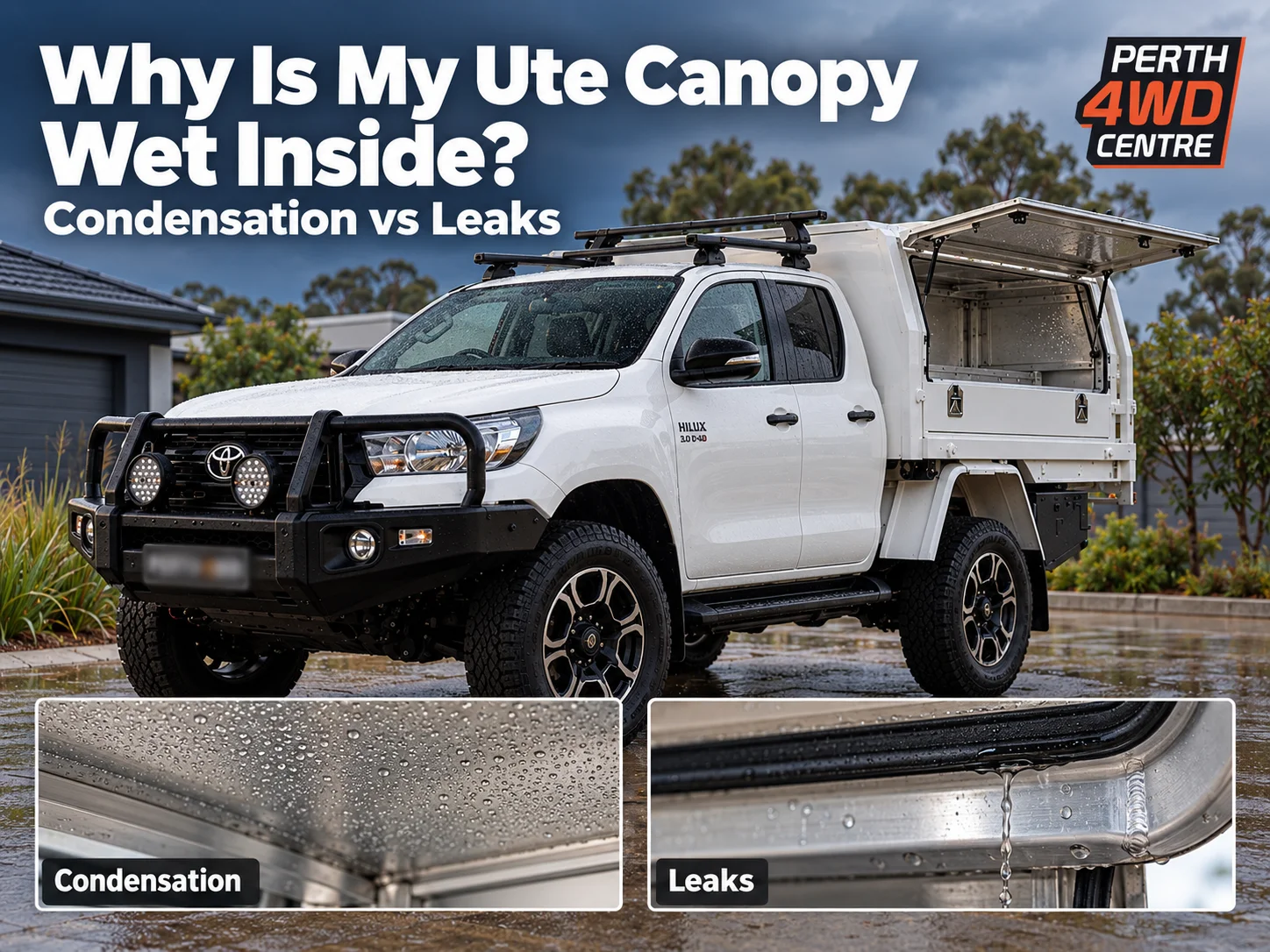
Wet inside your canopy? It’s either condensation or a leak, and the quickest way to tell is to check when and where the water shows up. Condensation appears after cold nights or damp gear and coats surfaces evenly. A leak shows up after rain or a wash and follows a trail.
We hear this question often at Perth 4WD, especially once the cooler, damp Perth mornings roll in. Plenty of owners assume the worst and start resealing everything. That can burn a weekend and still leave the canopy wet.
This guide covers ute canopy condensation vs leaks, how to find a ute canopy leak, and how to keep everything dry.
Common Causes of Moisture Inside a Ute Canopy
Moisture gets in two ways: it forms from humid air already trapped inside, or it enters from outside through a gap. Each needs a different fix.
Condensation From Trapped Moisture
Condensation in a ute canopy forms when warm, humid air touches a cold surface and turns back into water. The roof and walls cool quickly overnight, so that’s where droplets collect. The surface drops below the dew point, and the water appears.
The moisture usually comes from things you’ve put in there:
- Wet recovery gear, tarps and ropes
- Damp swags, tents or towels
- Muddy boards and boots
- A ute washed and closed up while still wet
Water Entering Through Leaks
Ute canopy leaking water comes from outside. The usual culprits are a flattened door seal, dried-out window rubber, a failed roof seam or an unsealed hole.
Rubber hardens under the sun, then stops springing back. That’s how water coming through canopy seals starts.
Ute Canopy Condensation vs Leaks: How to Tell the Difference
Timing is the giveaway. Condensation follows temperature and humidity. Leaks follow rain, washing and road spray.
| What you notice | Points to condensation | Points to a leak |
| Timing | Cold mornings, even after a dry night | During or after rain or a wash |
| Location | Roof and metal surfaces, evenly spread | Below a seam, seal or fixing |
| Pattern | Fine beads, sometimes dripping | Runs, streaks or a puddle in one spot |
| Dirt | Clean water | Dusty or stained trails |
| Dry day test | Still appears if gear is damp | Stays dry |
Signs of Condensation
- Droplets across the whole roof, not one spot
- Worse after a cold night or a trip with wet gear
- Clean, clear water
- Damp feel on cold metal, but no trail from a seam
Signs of a Water Leak
- Water appears only after rain or washing
- A line or stain leading back to a seal, seam or bolt
- Dirty water marks on the floor or walls
- The same corner gets wet every time
When Both Problems Can Occur
Yes, both can happen at once, and it’s common. A small leak adds moisture, and that moisture then condenses on the roof.
Fix the leak first, because it’s easier to confirm. Then deal with the humidity.
Finding the Source of a Ute Canopy Leak
To find a ute canopy leak, work from the seals to the joints and finish with a water test. Go in that order, because seals fail most often.
Inspect Door, Window and Canopy Seals
Run your fingers along every rubber seal. You’re looking for flat, cracked, shrunken or gapped sections.
Try these two checks:
- Paper test: close the door on an A4 sheet. If it slides out with no resistance, the seal isn’t gripping.
- Torch test: sit inside with the canopy closed in a dark garage while a mate shines a torch around the edges. Any light coming through is a path for water.
Check the seal where the canopy sits on the tray or tub too. A gap there lets spray in.
Check Joints, Mounting Points and Cable Entries
Look over the roof seams, rivets, clamp points and any hole where a cable passes through, such as a light or antenna wire. Old sealant shrinks and cracks at these spots.
A longer dual cab canopy has more roof seams to check. Our guide to the best dual cab canopy explains how those designs differ if you’re curious.
Carry Out a Controlled Water Test
- Empty the canopy and dry the inside completely.
- Get a helper with a garden hose on a gentle spray. No pressure washer.
- Start low and work up → sides first, then windows, then the roof.
- Spend two minutes per section.
- Watch inside with a torch and wipe spots with a dry paper towel.
The moment water appears, stop and mark the spot. You’ve found your leak.
Ways to Reduce Condensation Inside Your Ute Canopy
To stop condensation in a ute canopy, cut the moisture going in and keep air moving through. Sealing it tighter won’t help, because trapped humidity is the problem.
Improve Canopy Ventilation
Ute canopy ventilation for condensation works by letting humid air escape before it settles on cold surfaces. Open the rear door or windows for ten minutes after a wet trip or a wash.
Some owners fit filtered vents. They help, but vents can pull in dust on dirt roads, so keep the filters clean. Please don’t drill random holes. That trades one problem for a leak and dust problem.
Reduce Moisture Sources
Most condensation starts with what’s stored inside. Dry everything before it goes in.
Coming home from a trip? Hang swags, tarps and towels out first. Our ute canopy setups for camping guide covers the gear side, but the moisture point is simple: damp canvas is one of the biggest sources of humidity in a closed canopy.
Also, let the ute dry after a wash before you shut everything up.
Does Canopy Insulation Stop Condensation?
Canopy insulation helps reduce condensation, but it won’t stop it on its own. Lining the roof and walls keeps the inner surface closer to the air temperature, so there’s less of a cold surface for moisture to form on.
It doesn’t remove humidity, though. Damp air still needs a way out. Lining can also hide a slow leak behind it, so check behind panels now and then.
Keep Your Ute Canopy Dry and Mould Free
To keep a ute canopy dry, remove moisture quickly and check the hidden spots regularly. Small habits beat big fixes here.
Dry Wet Surfaces and Gear
Wipe down the roof and walls with a microfibre towel when you see droplets. Leave the canopy open for a while on a dry day. Take out anything damp instead of letting it sit overnight.
Check Hidden Areas for Trapped Moisture
Water hides where you don’t look. Lift mats and liners, and check under tool boxes, along the tray floor and in corners once a month. If something feels damp or smells musty, pull it out and dry it.
Deal With Mould and Corrosion Early
How to prevent mould in a ute canopy: dry it fast and don’t let damp surfaces sit. If mould appears, wipe it with a diluted vinegar mix or a mould cleaner, dry the area fully and fix the moisture source. Otherwise, it returns.
Watch for corrosion as well:
- Rust spots around screws and hinges
- White powder on bare aluminium
- Bubbling paint near seams
Treat these early, because they spread.
When to Get a Ute Canopy Leak Checked
Get it checked when you’ve done the seal and water tests and still can’t find the source. Also act if:
- Water collects on the floor after every rain
- The same stain keeps returning
- You see water near wiring or lights
- Rust is appearing where moisture sits
A second pair of eyes often spots what you’ve walked past a dozen times.
Need Help With Your Ute Canopy? Perth 4WD Can Help
If you are still not sure whether it’s condensation or a leak? We’re happy to talk it through. Perth 4WD has more than 10 years of experience, and our team of reputable mechanics can fit and install 4WD parts and accessories at our workshop.
We’re based in Maddington. Bring us your questions, and we’ll point you in the right direction.
FAQs
Do positive pressure vents stop ute canopy condensation?
Only partly. They rely on air flowing in while you drive, so they do little while parked overnight, when most condensation forms. Opening the canopy to air it out works better.
Are aluminium canopies worse for condensation?
Bare aluminium cools fast, so droplets can form sooner. The material isn’t the real cause. Trapped humidity and cold inner surfaces are, and lining plus airing the canopy both help.
Do moisture absorbers work in a ute canopy?
Yes, for low level humidity in a sealed canopy. They won’t cope with wet gear or a leak, so dry everything first and use absorbers as backup.
Can condensation damage canopy wiring and lights?
It can. Repeated moisture corrodes connections and can cause flickering or failed lights. Check cable entries and plugs for green or white build up, and keep connections dry.
Why is my ute canopy wet inside in winter?
Cold nights make the roof colder, while wet gear and closed windows raise humidity. Together they trigger condensation. Airing the canopy and drying gear before storing it reduces the problem.