
21 Jul
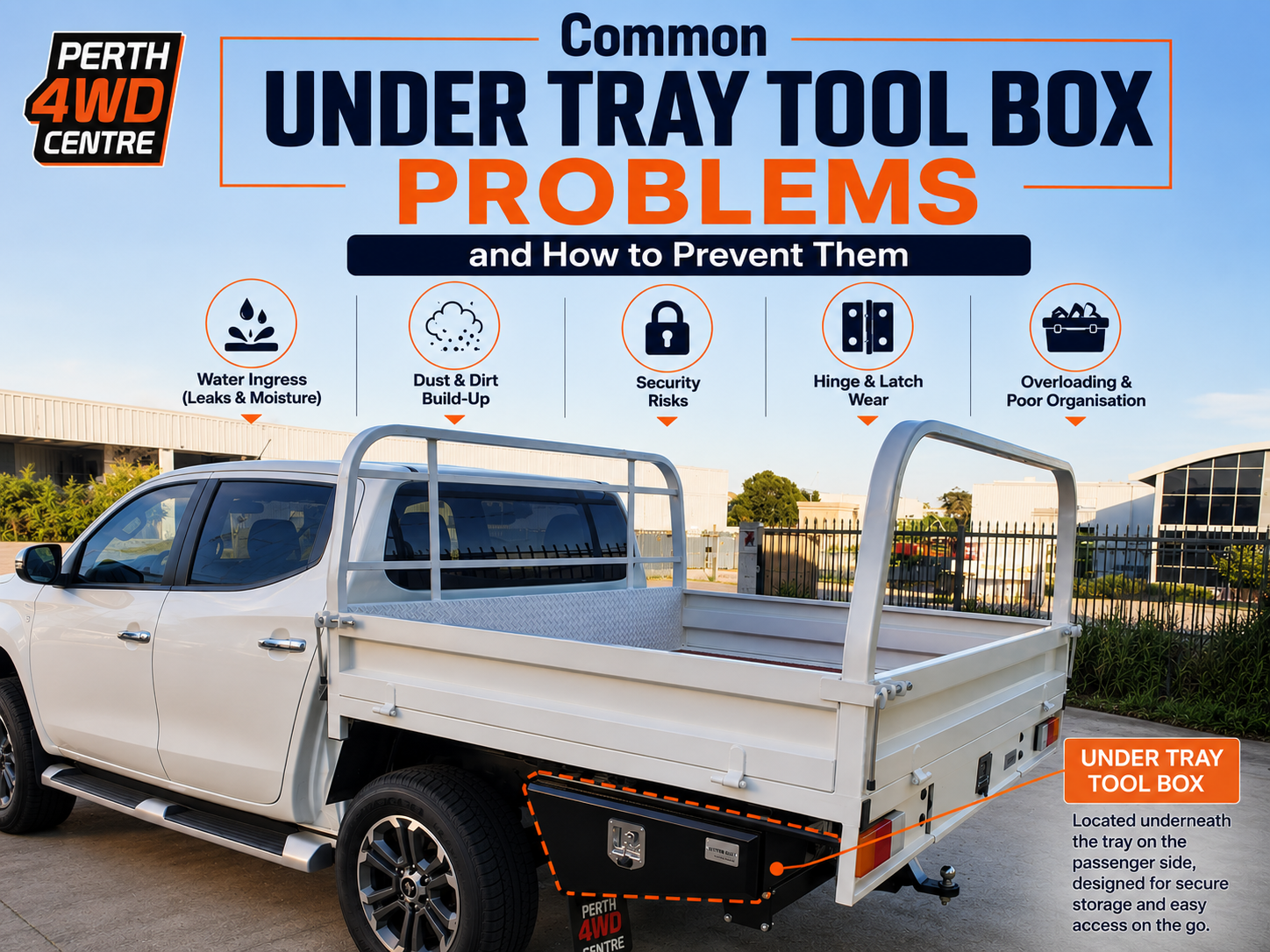
An under tray tool box can make your ute more practical and organised, but like any hardworking accessory, it needs the right setup and a bit of ongoing care.
From water leaks and seized locks to corrosion, overloading, and poor installation, small issues can turn into costly repairs if they’re ignored. The good news is that most of these problems are easy to prevent with regular maintenance and smart buying decisions.
Below are nine under tray tool box problems we regularly see, along with practical ways to prevent them before they become bigger and more expensive issues.
9 Under Tray Tool Box Problems and How to Prevent Them
1. Water Leaks and Dust Ingress in Your Under Tray Tool Box
Ask almost any tradie about toolbox problems, and water or dust will probably be near the top of the list.
We’ve inspected boxes that looked perfectly fine from the outside, yet the inside told a different story. Rusty hand tools, damp power tools, and a layer of fine dust coated everything.
In many cases, the culprit wasn’t the box itself. It was a flattened weather seal, a mounting hole that hadn’t been sealed properly, or a door that was slightly out of alignment.
A quality waterproof tool box should handle Australia’s conditions, but only when it’s installed properly and maintained as it should.
Tips to Prevent This
- Inspect rubber weather seals regularly and replace them if they’re cracked, compressed, or damaged.
- Choose an under-tray tool box with quality compression locks that pull the door firmly against the seal.
- Seal all mounting points with a high-quality automotive sealant during installation.
- If you’re buying new, look for products with a suitable IP rating for improved resistance to water and dust.
- After driving on muddy tracks or dusty roads, clean the sealing surfaces before closing the door again. This simple habit helps the seals last longer and keeps your gear protected.
2. Seized Locks, Latches, and T-Handles on Lockable Tool Boxes
A lockable tool box is only as reliable as its locking mechanism. You might have the strongest box on the market, but if the key won’t turn or the T-handle jams when you need it most, it quickly becomes a headache.
We’ve seen it happen plenty of times. A customer drops into our workshop convinced the lock has failed, only to find it’s years of dust, road grime, or the wrong lubricant causing the problem. It’s easy to overlook because the lock usually gets used every day, yet it’s one of the least-maintained parts of the entire toolbox.
Driving on unsealed roads, working around construction sites, or spending time near the coast only speeds up the wear. Fine dust works its way into the mechanism, while moisture can lead to corrosion if it’s left unchecked.
Tips to Prevent This
- Use a dry synthetic lock lubricant instead of oil-based sprays that attract dirt.
- Wipe dirt away from the handle before unlocking it after dusty trips.
- If the door is hard to close, check that the latch and striker are properly aligned.
- Replace worn locking components before they fail entirely.
- If you’re upgrading your toolbox for ute, use compression or whale-tail locks suited for everyday commercial use.
3. Sagging, Cracking, and Metal Fatigue in Aluminium Under Tray Tool Boxes
Lightweight doesn’t mean indestructible.
Aluminium under tray tool boxes are a popular choice as they keep the vehicle weight down but still provide good durability. This is especially true if you often haul tools, recovery gear, or tow. But it has its limits, like any piece of equipment.
One error we see often is treating the toolbox as a storage bin for anything and everything. Constant overloading with corrugated roads and frequent vibration can damage welds, corners and mounting points over time. Small cracks begin to develop, doors begin to sag, and what used to be a strong storage option becomes less stable.
Tips to Prevent This
- Stay within the manufacturer’s specified weight limits.
- Spread heavy equipment evenly rather than loading one end of the box.
- Lay a rubber pad inside the toolbox to assist in preventing vibration.
- Inspect welds and mounting points during routine vehicle servicing.
- If you consistently carry big gear, get a heavy-duty toolbox designed for tough jobs.
4. Hinge Drooping and Door Misalignment in Underbody Tool Boxes
If you’ve ever had to lift the door slightly just to get it to latch, there’s a good chance the hinges have started to move.
An underbody tool box sits in one of the toughest spots on a vehicle. Every bump, pothole, corrugated track, and uneven worksite transfers movement through the tray and into the mounting points. Over time, that constant vibration can throw the door out of alignment.
When we’re fitting trays or reconditioning older ones at Perth 4WD Centre, we always pay close attention to mounting points before installing storage boxes. Even the best toolbox won’t perform properly if it isn’t supported correctly from the start.
Tips to Prevent This
- Re-tighten mounting bolts after the first couple of weeks of use.
- Avoid placing excessive weight on an open toolbox door.
- Adjust the striker if the latch no longer closes smoothly.
- Choose concealed or heavy-duty hinges for better protection.
- Inspect hinges regularly, especially if your ute spends a lot of time off-road.
5. Galvanic Corrosion in Aluminium Under Tray Tool Boxes
Corrosion isn’t always obvious until the damage has already begun.
When different metals stay in contact and moisture gets between them, galvanic corrosion can slowly attack the aluminium around mounting points and fasteners. It’s a problem that’s more common in coastal areas or on vehicles regularly exposed to rain, mud, and road spray.
Tips to Prevent This
- Use nylon washers or insulating materials between dissimilar metals.
- Keep drainage holes clear so water doesn’t sit inside the toolbox.
- Wash mud and salt off your ute after coastal or off-road trips.
- Touch up damaged coatings before bare metal is exposed.
- Use quality mounting hardware that’s suitable for aluminium applications.
6. Tool Box Theft and Security Risks
Your tools aren’t just equipment—they’re part of your livelihood. Replacing stolen power tools or specialist gear can cost thousands of dollars, not to mention the downtime while you wait to get back on the job.
That’s why security should be part of the buying decision, not an afterthought.
Over the years, we’ve had customers ask us to replace damaged boxes after attempted break-ins. In many cases, the thieves didn’t need sophisticated tools. They simply took advantage of weak locks, exposed fasteners, or poorly fitted doors. A well-built lockable toolbox won’t stop every theft attempt, but it can make your vehicle a much less appealing target.
Tips to Prevent This
- Choose compression or whale-tail locks that are difficult to pry open.
- Look for designs with concealed hinges and internal fasteners.
- Replace worn locks as soon as they show signs of damage.
- Park in well-lit, busy areas whenever possible.
- Avoid leaving expensive tools in your vehicle overnight unless necessary.
7. Overloading Your Under Tray Tool Box
If you’re looking for a reliable tool box for your ute, managing how much weight you pack into it is just as important as choosing the right size.
It’s tempting to use every bit of available storage, especially when you’re carrying tools for different jobs. But just because everything fits doesn’t mean your ute can safely carry it.
Every ute tool box adds weight before you even load your first tool. Add impact drivers, socket sets, recovery gear, spare parts, and consumables, and the kilos add up quickly. That extra weight affects far more than the toolbox itself. Braking distances can increase, suspension works harder, fuel consumption rises, and steering may start to feel heavier.
Before loading up, it’s worth checking your vehicle’s Gross Vehicle Mass (GVM) and available payload. It’s a simple step that can prevent expensive repairs and help keep your vehicle operating safely.
Tips to Prevent This
- Know your vehicle’s payload capacity before loading equipment.
- Include the weight of the toolbox itself when calculating available payload.
- Store only the tools you genuinely need each day.
- Distribute weight evenly across your storage setup.
- Upgrade to a heavy-duty toolbox if your workload demands carrying heavier equipment regularly.
8. Poor Under Tray Tool Box Placement and Clearance Issues
Not every storage box suits every ute.
We’ve had customers enquire about under tray tool boxes that looked perfect on paper, but simply wouldn’t work once we measured the vehicle. The spare tyre, exhaust system, mudguards, suspension travel, or even chassis flex can reduce the usable space more than people expect.
That’s why we always recommend measuring the vehicle, not just the tray. During tray reconditioning and accessory installations, our team checks these clearances before fitting anything. Spending a little extra time planning helps avoid rattles, damaged doors, and expensive modifications later.
Tips to Prevent This
- Measure around the spare tyre, exhaust, and suspension before purchasing.
- Make sure doors can open fully without hitting nearby components.
- Allow enough clearance for chassis movement when the vehicle is loaded.
- Choose mounting brackets designed for your vehicle.
- If you’re unsure, have the box professionally measured and fitted.
9. Disorganised Under Tray Tool Box Storage
When every socket, spanner, and power tool has its own place, you’re not digging through a pile of loose gear every time you arrive at a job. It also reduces tool damage and stops equipment from shifting while you’re driving.
If you’re setting up new under-tray storage, think beyond empty space. Adjustable dividers, drawers, storage bins, and LED lighting can make a huge difference to how practical the setup is day after day.
Tips to Prevent This
- Store frequently used tools where they’re easiest to reach.
- Use dividers or drawers to separate different types of equipment.
- Secure heavier items to stop them from moving during travel.
- Clean out broken or unused tools regularly.
- Add lighting if you often work early mornings or after dark.
Importance of Professional Under Tray Tool Box Installation
A quality toolbox deserves a quality installation.
Our workshop is equipped to supply, fit, and integrate tool boxes with both new steel trays and professionally reconditioned trays. If you’re after a specific configuration that isn’t currently in stock, we can also source it through our supplier network and tailor the setup to suit your vehicle.
Correct fitment doesn’t just improve appearance. It helps protect seals, reduces vibration, maintains proper clearances, and ensures your storage system performs the way it should for years to come.
Protect Your Under Tray Tool Box for Years to Come | Perth 4WD
With more than 10 years of experience working on 4WDs and commercial utes, Perth 4WD Centre can help you choose the right under tray tool box for your vehicle and workload.
We supply, fit, and install quality under tray tool boxes, professionally recondition existing trays, and source hard-to-find products through our trusted supplier network. Every installation is completed with proper fitment, clearances, and long-term performance in mind.
Whether you’re upgrading your work ute, replacing a worn-out toolbox, or planning a complete tray setup, we’re here to help.
Contact Perth 4WD Centre today
FAQs
What are common issues with under tray tool boxes in Australian vehicles?
Harsh Australian conditions can cause water leaks, dust ingress, seized locks, hinge misalignment, galvanic corrosion, metal fatigue, rattling and worn weather seals. With regular maintenance, excellent materials and proper installation, you may prevent these concerns and extend the life of your under tray tool box.
What are the recommended brands for secure under tray storage?
At Perth 4WD Centre, we stock and fit premium under tray tool boxes from trusted brands that are known for durability, strong locking systems and weather resistance. Our expertise also helps you determine the proper size, fit and configuration for your ute, tray and workload.
How to fix rattling sounds from an under tray tool box?
Rattling is due to loose mounting bolts, damaged hinges, out-of-alignment locks or tools rattling about inside the box. Tighten all fasteners and mounting brackets, adjust latch, replace damaged hardware, and use rubber mats or organisers to cut down on vibration and movement.