
5 Aug
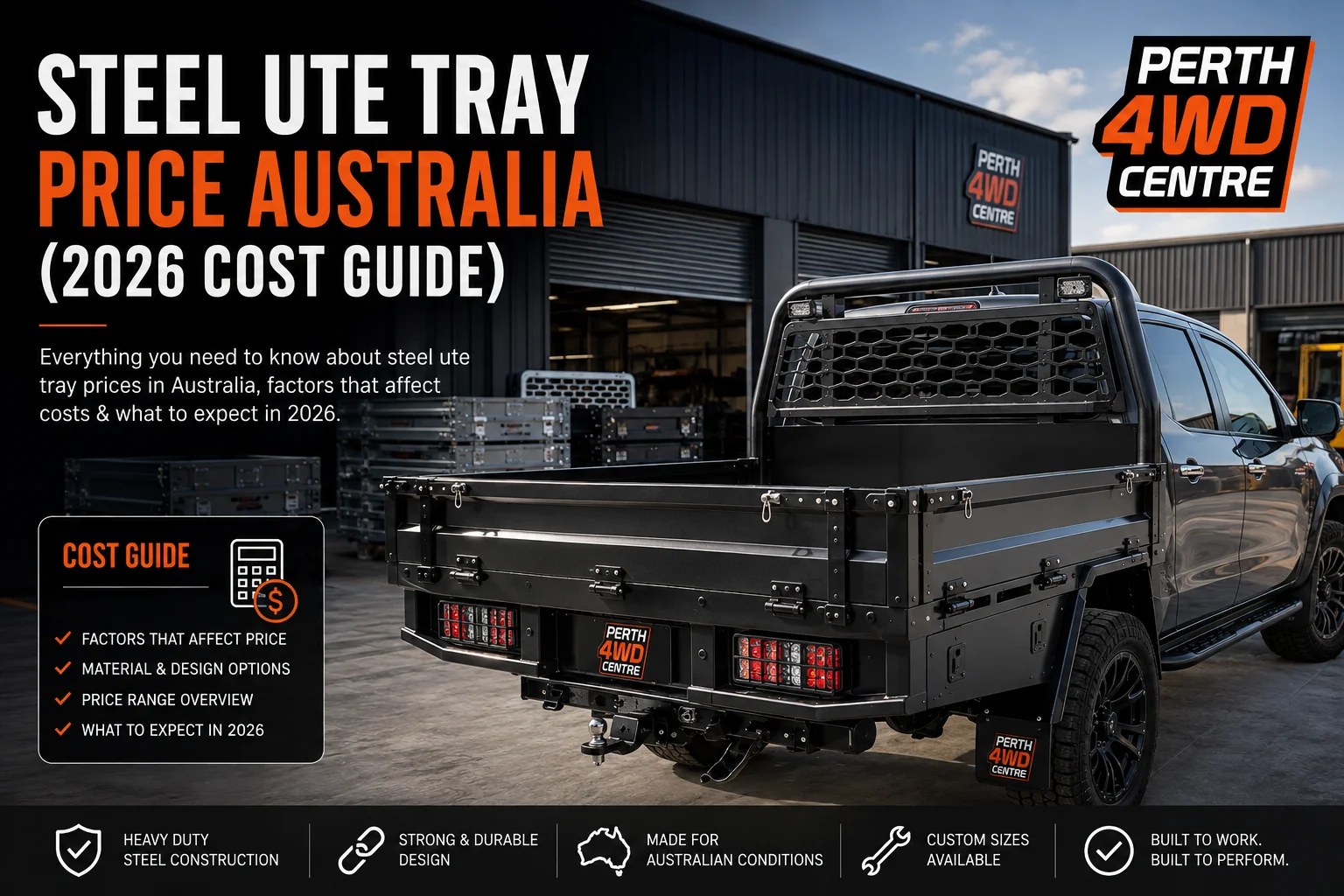
Wondering what a steel ute tray Cost actually looks like before you call around for quotes? In Australia, a new tray Cost average starts around $3,000–$3,700 supply and fit for a standard size, with fully customised heavy-duty builds running from $4,800 up to $6,500 or more depending on size, brand and add-ons.
This guide breaks down indicative pricing by tray size, vehicle type and optional upgrades, so you know what you’re actually paying for before requesting a formal quote.
A quick note before we dive in: steel prices, freight and labour rates shift with market conditions, so treat every figure below as a planning guide rather than a locked-in quote.
How Much Does a Steel Ute Tray Cost in Australia?
Steel ute tray pricing comes down to tray size, build quality and how much customisation you add on top of the standard package. Current price estimates for a supplied and fitted steel tray generally sit :
| Build Type | Price Range (Supply + Fit) |
| Standard steel tray, entry-level size | $3,000–$3,700 |
| Mid-range steel tray, dual-cab sizing | $3,700–$4,800 |
| Heavy-duty steel ute tray with custom upgrades | $4,800–$6,500+ |
| Used/second-hand steel tray (private sale) | $350–$3,500 |
Disclaimer: These are indicative price estimates only and vary by supplier, region and vehicle. What we can confirm directly is that Perth 4WD’s ute tray and well body packages start at $3,000, which covers removal of the existing ute tub or well body, fitting the new tray, LED lights, refitting your camera and reverse sensors. That’s a genuine all-in starting figure rather than a stripped-back sticker price.
Steel Ute Tray Prices by Size and Vehicle Type
Tray size and vehicle type both shift the price, but length alone doesn’t decide the final number; chassis design, width and vehicle compatibility matter just as much. A dual-cab steel ute tray is among the most common configurations and often provides a useful baseline for comparing prices.
| Vehicle / Cab Type | Standard Size | Price Impact |
| Dual cab (Hilux, Ranger, Triton, Navara, D-Max, Colorado) | 1870mm x 1870mm | Baseline pricing |
| Extra cab | 1870mm x 2100mm or 1870mm x 1870mm | Close to baseline, slightly more for extra length |
| Single cab | 1870mm x 2400mm | Higher, due to extra steel and length |
| Dodge Ram / Ford F-Series | 2100mm x 2200mm | Higher, larger frame and heavier cross-members |
| Wide-tyre setups | 2000mm wide (instead of 1870mm) | Adds cost because the tray requires a wider build and additional material |
If you’re planning a ute tray replacement on a bigger American truck or a wide-tyre setup, compare the full fitted cost rather than the tray’s advertised base price, since these builds use noticeably more steel than a standard dual-cab tray.
What’s Included in the Price?
Most steel ute tray quotes include the tray itself, standard fitting, basic lighting and standard paint as part of the base price. At Perth 4WD, this covers:
- Tray manufacture and supply
- Standard fitting, including removal of the existing ute tub or well body
- LED lights, refitted camera and reverse sensors
- Standard white or satin black paint
- Galvanised mudguards, mud flaps, rope rails and chequer plate flooring
What Costs Extra?
Upgrades beyond the standard build are usually quoted separately unless you’ve specifically asked for an all-in package:
- Roll-out trundle drawers
- Under-tray tool boxes
- Water tank
- Metallic or colour-matched paint
- Rear ladder rack or full-length light plate
At Perth 4WD, standard white or satin black is included, while metallic or custom colour-matching costs extra. It’s worth confirming with your supplier whether GST and delivery are already factored into the number you’ve been quoted. Perth 4WD’s steel ute trays and well bodies range lists standard features and optional upgrades separately, so it’s easier to see where your money is going.
What Affects Steel Ute Tray Cost?
Beyond size, a few other factors influence the final quote for a custom steel ute tray:
Steel grade and galvanising: Galvanised steel resists rust better than uncoated steel, which affects both material cost and long-term value.
Paint and finish: Standard colours are included in most base builds, while metallic or custom colour-matching adds cost.
Number of upgrades: Drawer systems, tool boxes, water tanks and ladder racks each add to the total individually.
Fitting complexity: Refitting cameras, reverse sensors and lighting during installation adds labour time compared with a bare tray swap.
New Steel Tray vs Ute Tray Reconditioning
A new steel tray is generally the better option when the existing tray has structural damage, extensive corrosion, or a layout that no longer suits the vehicle.
A reconditioned tray, by contrast, is generally quoted after inspection, since rust, structural damage and the paint preparation required can significantly affect labour costs, so there’s no fixed reconditioning price the way there is for a new build.
Reconditioning suits ute owners whose existing tray is structurally sound but tired-looking or rusted. Perth 4WD’s reconditioned trays and well bodies service removes the tray, pressure washes, sands, primes, repaints and refits it — a lower-cost path to a tidy tray for older utes, provided the structure is still sound.
Steel vs Alloy Ute Tray: Which Offers Better Value?
Tray price depends heavily on fabrication quality, thickness, accessories and manufacturer, so steel isn’t automatically cheaper than every alloy option on the market. What steel does offer is repairability: damaged sections can often be welded, straightened or recoated depending on the extent of the damage, whereas alloy panels more commonly need full replacement.
For tradies, farms and touring setups carrying real everyday loads, that repairability and the stronger, more durable construction of steel is a big part of why it’s widely chosen across WA. Read more in Perth 4WD’s steel tray guide for a full comparison of strength, durability and cost between the two materials.
Is a Steel Ute Tray Worth the Cost?
For many tradies, farmers and regular off-roaders, a heavy-duty steel ute tray can justify its higher upfront cost through stronger construction, repairability and long-term durability.
Galvanised steel resists rust in coastal and dusty WA conditions, which spreads that upfront cost across many years of hard use.
What you’re really paying for:
- A strong, durable platform for tools, machinery and worksite gear
- A tray that can be welded, straightened and recoated instead of replaced
- Structural rigidity that holds up through chassis flex off-road
- A secure mounting surface for canopies, racks and tool boxes
How to Compare Steel Ute Tray Quotes
Use this checklist before accepting any quote:
- Steel quality: Galvanised or uncoated?
- What’s included: Fitting, lights, camera and sensor refitting confirmed in writing?
- Sizing: Standard dimensions, or built to your exact cab type?
- Upgrades: Drawers, tool boxes and water tanks priced separately or bundled?
- GST and delivery: Included in the quoted figure or added after?
- Local manufacturing: Built locally, or subject to long freight lead times?
Perth 4WD works through this exact process with WA ute owners, tradies and fleet managers, comparing sizes, steel grades and upgrade options before quoting so there are no surprises once the build starts.
Get a Transparent Steel Ute Tray Quote from Perth 4WD
If you’re comparing steel ute tray prices across Australia and want a clear, upfront number rather than a vague estimate, Perth 4WD can walk you through tray sizing, standard features and upgrade options for your exact vehicle.
Whether you need a tray for work, touring or everyday reliability, get in touch with Perth 4WD to request a quote tailored to your ute.
FAQs
How much does a dual-cab steel ute tray cost?
A dual-cab steel ute tray at the standard 1870mm x 1870mm size sits toward the baseline of the pricing scale, typically starting from around $3,000 supplied and fitted, before any upgrades are added.
Is a steel tray cheaper than an alloy tray?
Not always, pricing depends on fabrication quality, thickness and accessories rather than material alone, so it’s worth comparing like-for-like specifications rather than assuming steel is automatically the cheaper option.