
24 Jun
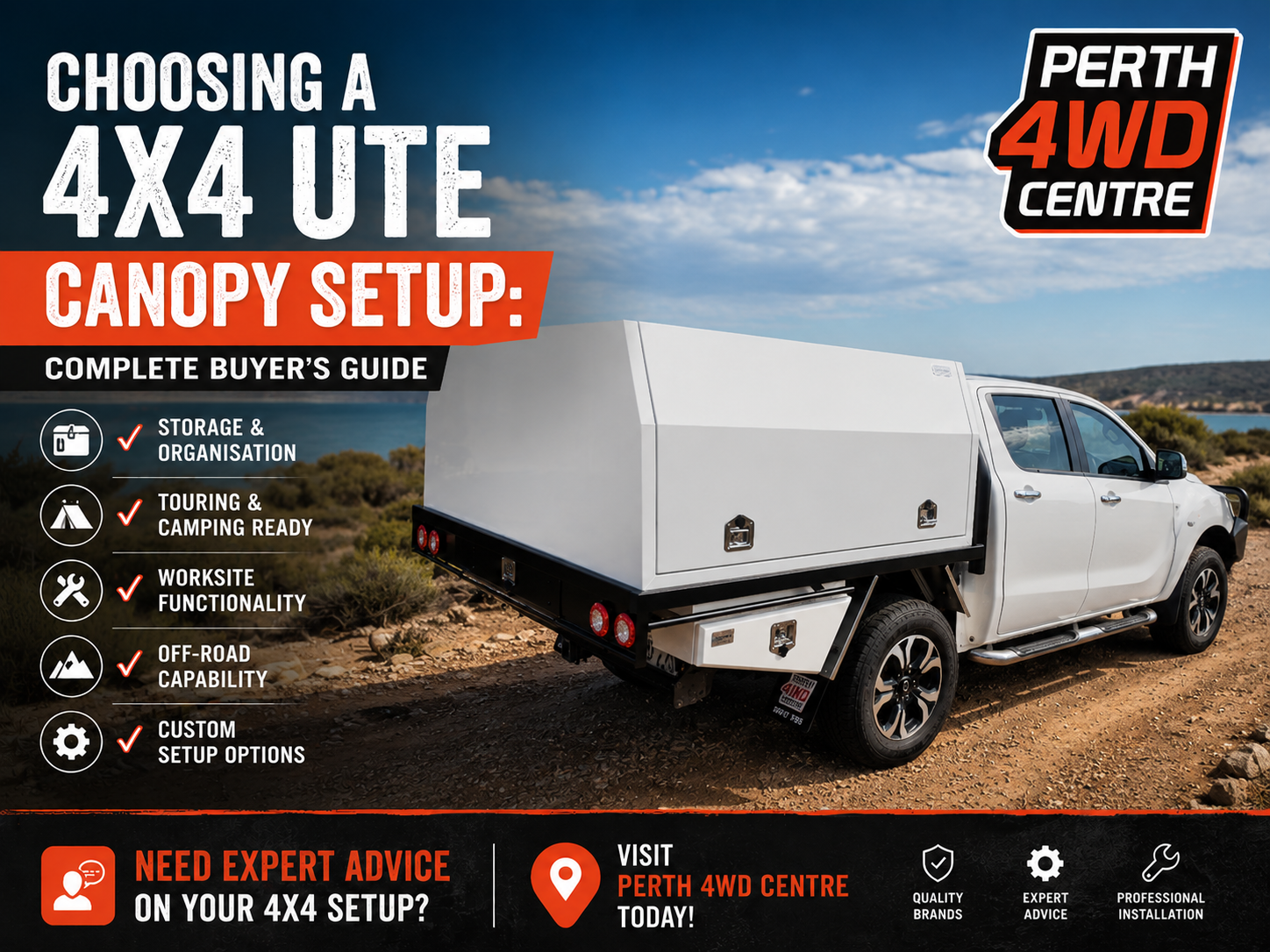
The reality is that choosing a canopy isn’t just about selecting a box that looks good on the back of your ute. It needs to suit your vehicle, your payload, your travel style, and Australia’s demanding conditions.
So, whether you’re building a touring rig, work ute, or weekend adventure vehicle, here’s what you need to know before choosing the best 4×4 ute canopy setup.
Choosing a 4WD Ute Canopy: Full Comparison of Setup Types and Features
Let’s compare the different canopy setups, materials, sizes, and features to help you find the right solution for your needs.
Tub-Mount vs Full Tray Replacement: Which 4WD Ute Canopy Setup Is Better?
One of the first decisions you’ll face is whether to keep your factory tub or replace it with a tray and canopy system.
While both options have their place, the right choice depends entirely on how you use your ute.
Tub-Mount Canopy: Ideal for Weekend Adventures
A tub-mounted canopy is the most affordable way to gain secure storage.
It’s a popular choice for owners who:
- They drive their ute
- Want to retain the factory appearance
- Go camping occasionally
- Don’t require extensive storage systems
The advantage is simplicity. You’re utilising the existing tub rather than replacing it.
However, one of the most common issues we see in workshops is water ingress caused by poor installation. Factory tubs aren’t always perfectly flat, and many DIY installations fail to properly seal mounting points, tub liners, tailgates, and corner seams.
The result?
Dust, water, and mud eventually find their way inside.
Professional fitting ensures correct alignment, mounting, and sealing to help prevent these common problems. We’ve inspected canopy setups where dust ingress wasn’t caused by the canopy itself, but by poorly sealed cable entries, mounting points, or tray-to-canopy interfaces. Attention to these small details often makes the biggest difference in long-term usability.
Full Tray Replacement: Built for Serious Touring
For customers planning long-distance travel, towing, trade work, or extensive off-road use, a tray and canopy combination often provides far greater flexibility.
Benefits include:
- Flat floor storage
- Easier organisation
- Larger usable space
- Better access to gear
- More options for custom fit-outs
Aluminium vs Steel Ute Canopies: A Comparison of Strength, Weight and Cost
The material you choose affects far more than appearance.
Weight, payload capacity, durability, fuel economy, and corrosion resistance are all influenced by your canopy material.
Why Aluminium Continues to Grow in Popularity
Most modern touring builds now favour aluminium canopies.
The reasons are simple:
- Lighter overall weight
- Excellent corrosion resistance
- Better fuel efficiency
- Increased payload availability
- Long-term durability
Many premium canopies are built using high-quality aluminium alloys that provide excellent strength while remaining significantly lighter than steel. The reduced weight places less stress on the vehicle and suspension when travelling over corrugations and rough outback roads.
For WA drivers who regularly visit beaches, coastal tracks, and remote regions, corrosion resistance is particularly valuable.
Every kilogram saved on the canopy means more capacity for:
- Water
- Fuel
- Camping equipment
- Recovery gear
- Passengers
The Steel Weight Problem
Steel remains a durable option, particularly for heavy commercial applications.
However, many owners underestimate how much payload is consumed before they even begin loading equipment.
A steel tray, steel canopy, drawer system, fridge, dual batteries, and camping gear can quickly add hundreds of kilograms.
To put this into perspective, some steel trays can weigh approximately 380kg, while comparable aluminium alternatives may weigh approximately 110kg. That weight difference can significantly impact your available payload.
We’ve seen many touring vehicles approach their legal limits long before the owners realise it. That’s where proper planning becomes critical.
GVM and Payload: How Each Canopy Setup Affects Your Load Capacity
One of the biggest mistakes we see is customers choosing accessories individually without calculating the total vehicle weight.
It usually starts with:
- Bullbar
- Winch
- Suspension
- Canopy
- Drawers
- Fridge
- Recovery gear
- Roof rack
- Family passengers
Individually, each item seems reasonable.
Combined, they can easily push a vehicle beyond its legal Gross Vehicle Mass (GVM).
Why GVM Matters
Many modern dual-cab utes only have a payload capacity of around 900kg to 1,050kg. A bullbar can add approximately 60kg, a winch another 35kg, and a canopy several hundred kilograms more before passengers, fuel, water, and camping equipment are even loaded.
Exceeding your vehicle’s GVM can impact:
- Vehicle handling
- Braking performance
- Tyre wear
- Suspension life
- Insurance compliance
- Legal roadworthiness
So it is recommended by our experts to calculate the weight before finalising a canopy build because accessories add up much faster than expected.
Canopy Size Comparison: 1200mm vs 1500mm vs Full-Length – What Should You Choose?
The size of your canopy affects storage, vehicle balance, and day-to-day practicality.
Interestingly, Perth 4WD supplies canopy depths ranging from approximately 700mm through to 1800mm, so you can choose the one that suits your needs.
Partial or Cross-Deck Canopies
Perfect for owners who still need open tray space.
Advantages include:
- Reduced weight
- Better weight distribution
- Space for dirty equipment
- Greater flexibility
By keeping more weight forward of the rear axle, cross-deck canopies can help maintain better vehicle balance while still providing secure storage.
Tradies and recreational users often favour this setup.
1500mm Canopies: The Sweet Spot
For many dual-cab owners, 1500mm is the ideal compromise.
It typically provides enough room for:
- Upright fridge
- Pantry storage
- Recovery gear
- Camping equipment
- Electrical systems
Without creating excessive rear overhang.
For many touring builds, it delivers the best balance between storage capacity, vehicle handling, and practicality.
Full-Length Canopies
If maximum storage is your goal, a full-length canopy is difficult to beat.
However, larger canopies place more weight behind the rear axle, making suspension selection increasingly important.
Jack-Off Canopies
Jack-off systems continue growing in popularity among Australian travellers.
The ability to remove the canopy when not touring gives owners greater flexibility while retaining the benefits of a dedicated touring setup.
Many systems use specialised mounting points, clamps, and removable support legs that allow the canopy to be safely removed and reinstalled when required.
Dust Sealing and Weather Protection: Which Canopy Type Performs Best Off-Road?
Australian conditions are brutal on 4WD equipment.
Corrugations, river crossings, rain, mud, and fine bulldust constantly test canopy systems.
Outback Dust Is Relentless
Anyone who has travelled WA’s remote tracks knows that dust can find its way into almost anything.
Without proper sealing, you’ll eventually discover dust inside:
- Clothing bags
- Food containers
- Electrical compartments
- Bedding
One reason dust ingress is so common is the low-pressure zone that forms behind a moving vehicle. This “vacuum effect” actively pulls fine dust through even the smallest gaps around tailgates, canopy doors, mounting points, and cable entry locations.
Quality Components Matter
A properly sealed canopy should include:
- Automotive-grade rubber seals
- Compression locks
- Quality door frames
- Pressure equalisation vents
- Protected cable entry points
Pressure vents play an important role by helping equalise internal pressure and reducing the suction effect that pulls dust into the canopy.
Installation Is Just as Important
Even premium canopies can leak when fitted incorrectly.
Poorly aligned mounting points, inadequate sealing, and incorrect installation techniques are common causes of dust and water ingress.
This is where professional fitting makes the difference between a canopy that lasts years and one that constantly causes frustration.
Using quality sealants, correct fastening techniques, and proper installation procedures helps minimise the risk of leaks and structural movement over time.
Get the Best Ute Canopy Setup from Perth 4WD
Choosing the right canopy setup isn’t about buying the biggest canopy or adding every accessory available.
It’s about building a setup that suits your vehicle, your travel style, and your future plans.
At Perth 4WD, we help owners avoid costly mistakes by looking at the complete picture, from tray selection and canopy sizing through to weight considerations, storage solutions, electrical systems, and practical touring requirements.
Whether you’re building a weekend camping rig, a serious outback tourer, or a hardworking trade vehicle, investing in the right setup from the start will save time, money, and headaches down the track.
Ready to build your dream tourer? Perth 4WD doesn’t just fit trays and canopies; we help create practical, reliable custom 4WD ute setups designed for real Australian conditions.
Contact our team today or visit our workshop to discuss your next build.